

AI and the Future of Work: Insights from Stefan Löfven on the RegulatingAI Podcast with Sanjay Puri
RegulatingAI Podcast
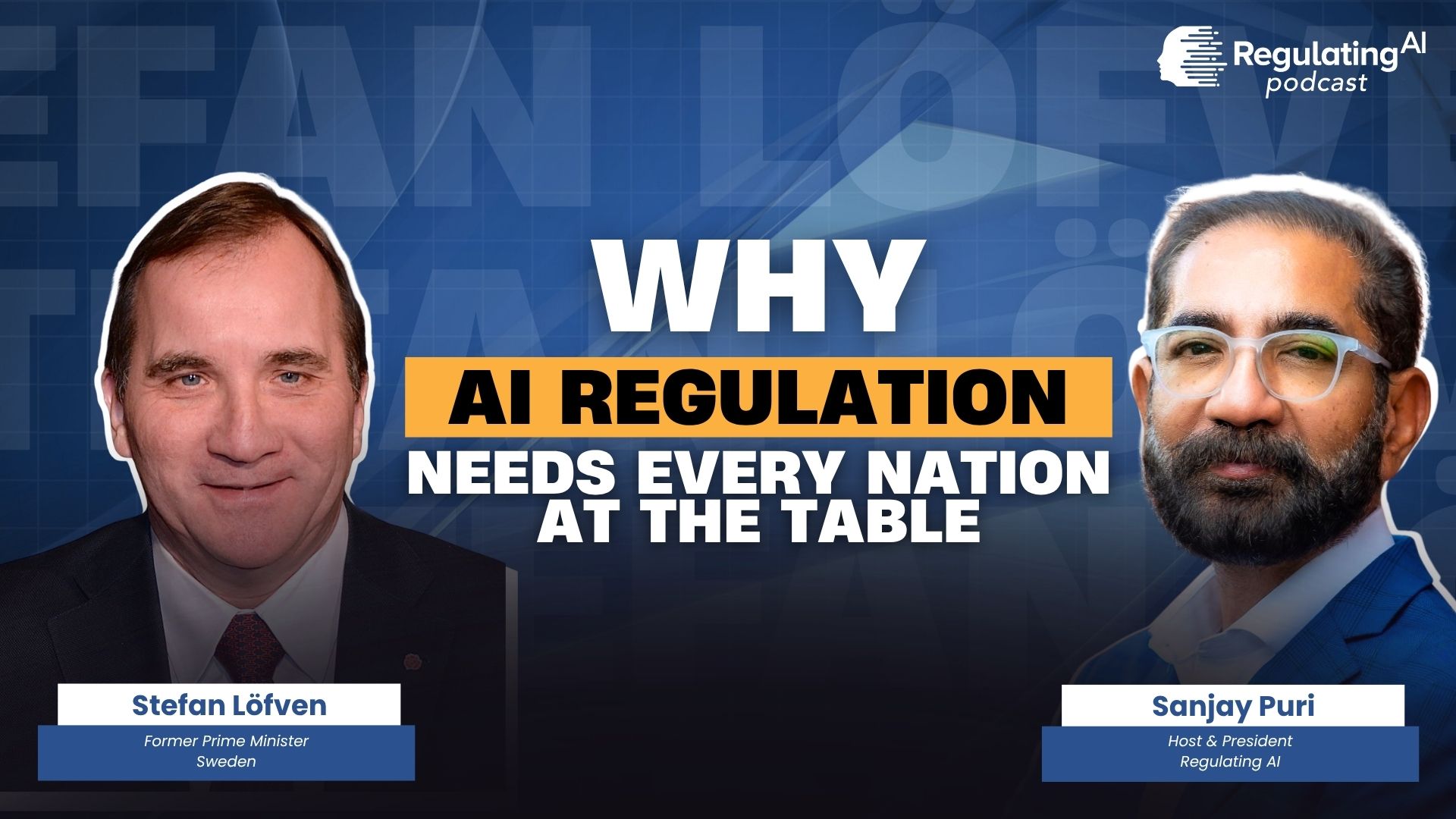
Stefan Löfven, former Prime Minister of Sweden, with Sanjay Puri, President of RegulatingAI
On the RegulatingAI podcast, Stefan Löfven & Sanjay Puri explore how AI is reshaping work, stressing human collaboration, reskilling & inclusive governance.
In a thought-provoking episode of the RegulatingAI podcast, hosted by Sanjay Puri, former Swedish Prime Minister Stefan Löfven offers a grounded, human-centric perspective on the future of work in the age of AI.
Jobs Aren’t Disappearing—They’re Evolving
One of Löfven’s key insights is that AI doesn’t eliminate jobs entirely—it reshapes them. When certain tasks are automated, the real challenge becomes redefining the remaining work. Employees don’t become obsolete; instead, their roles evolve.
This shift demands intentional redesign. If AI takes over repetitive or cognitive tasks, workers must be empowered to take on new responsibilities that add value in different ways. The future of work, then, is less about replacement and more about reinvention.
Why Dialogue Matters More Than Ever
A recurring theme in the conversation on RegulatingAI with Sanjay Puri is the importance of dialogue. Löfven emphasizes that decisions about AI adoption shouldn’t happen in isolation. Instead, they must involve continuous negotiation between employers and employees.
Why? Because workers bring invaluable, experience-based knowledge to the table. Ignoring that knowledge isn’t just unfair—it’s inefficient. Organizations that actively engage employees in shaping AI-driven changes are more likely to succeed.
The Human Edge in an AI World
AI may be powerful, but it lacks context, judgment, and lived experience. Löfven argues that the smartest path forward is combining AI capabilities with human insight.
Employers who fail to leverage the knowledge of their workforce risk falling behind. In contrast, those who integrate human intelligence with AI systems can unlock far greater productivity and innovation.
Reskilling Is a Shared Responsibility
As roles evolve, so must skills. But who is responsible for this transition?
According to Löfven, the answer is simple: everyone. Governments must invest in education and retraining systems. Companies need to create opportunities for learning within the workplace. And individuals must be willing to adapt and grow.
This shared responsibility ensures that workers aren’t left behind—and that societies remain resilient in the face of rapid technological change.
A Growing Gap—and a Global Challenge
The discussion also touches on a critical issue: inequality. AI development is currently concentrated in a handful of companies and countries, creating a widening gap between the global north and south.
Löfven warns that this imbalance isn’t just a moral concern—it’s an economic risk. A more inclusive approach to AI development benefits everyone, fostering stability and shared growth.
Governance, Trust, and the Road Ahead
Perhaps the most powerful takeaway from the RegulatingAI podcast is that AI governance isn’t just about regulation—it’s about trust. Trust between workers and employers. Between citizens and governments. And between nations.
Without this trust, even the most sophisticated policies will fall short.
As Sanjay Puri reflects in his conversation with Stefan Löfven, the real challenge isn’t keeping up with AI’s speed—it’s ensuring that human values guide its direction.
Final Thought
AI will undoubtedly transform the world of work. But its impact isn’t predetermined. The future depends on the choices we make today—how we collaborate, how we govern, and how we include people in the process.
Because in the end, as Löfven reminds us, it’s not AI that will decide the future of work—it’s us.
Upasana Das
Knowledge Networks
email us here
Visit us on social media:
LinkedIn
Instagram
Facebook
YouTube
X
Legal Disclaimer:
EIN Presswire provides this news content "as is" without warranty of any kind. We do not accept any responsibility or liability for the accuracy, content, images, videos, licenses, completeness, legality, or reliability of the information contained in this article. If you have any complaints or copyright issues related to this article, kindly contact the author above.
